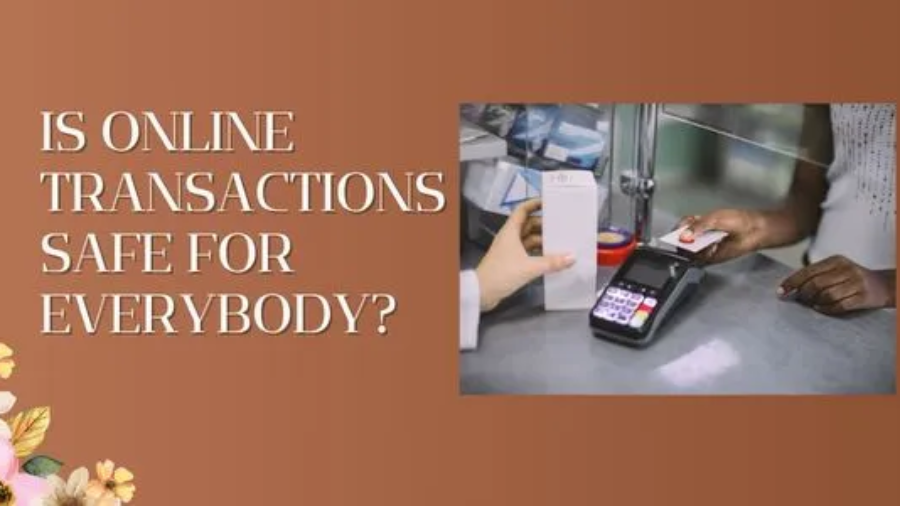
online transactions safe for everybody

Although online transactions are simpler, is it safe for everybody to utilize them?

In India nowadays, a lot of individuals make purchases using their mobile devices. Online transactions are already commonplace for everything from purchasing veggies to making payments on electric bills. Without holding currency, individuals may mail cash, pay retailers, and purchase digitally.

Payments are now simple and rapid thanks to UPI and QR codes. For many transactions, consumers only require a mobile device and an online payment application. Digital transactions nevertheless have certain drawbacks. Some individuals lose funds due to fraud on the internet, and not everybody understands how to utilize them securely. This brings up a crucial query: Is it secure for everybody to utilize online payment methods?

How Can Individuals Benefit from Online Payment Methods?

Online transactions simplify routine responsibilities and reduce effort. It’s not constantly necessary for individuals to head to a bank or bring currency while they go shopping. From where they live, they are able to send cash to other family members and pay expenses.

Online transactions are also advantageous to small businesses. Consumers may pay for their items by scanning a QR code. Keeping cash for each client is not constantly a concern for retailers.

In an emergency, online payments are very helpful. Even if household members live in other places, it is possible to swiftly send funds to them. These offerings, nevertheless, function best when users have accessibility to a smartphone, a dependable internet connection, and an encrypted payment method.

Making an online payments? Read this before it – How a Single Telephone Call Could Cost You Your Financial Savings?

Why Do Certain Individuals Have Trouble Making Online Transactions?

Despite the fact online monetary transactions are widely used nowadays, certain individuals still have trouble using them. Not everybody has a dependable connection to the internet or a smartphone of their own.

Payment applications may be difficult for elderly individuals to grasp. Guidelines that are hard to grasp can additionally lead to issues for individuals who aren’t familiar with comprehending words in English.

Issues with access to the internet can be problematic, particularly in rural and isolated regions. A bad connection to the network could sometimes lead to a transaction to be unsuccessful. People might not be aware that their funds have been moved in these circumstances.

These issues demonstrate that everybody is expected to be able to easily comprehend digital transactions. When challenged with difficulties, individuals want straightforward advice and appropriate assistance.

How Can Payment Fraud Occur Online?

Another significant issue is payment via internet fraud. Some crooks attempt to deceive consumers into transferring money or disclosing information about their bank accounts.

For instance, someone posing as a bank representative may telephone anyone. An OTP or additional confidential data may be requested by the caller. Additionally, some customers get phony communications concerning rewards, reimbursements, or issues with their bank accounts.

Additionally, shopkeepers may fall victim to false advertising. It is possible for a consumer to take a snapshot of a fake transaction and walk away before really making the purchase.

It is important for people to keep in mind that they ought to never give out their OTP or UPI PIN. They may safeguard their financial assets by being cautious when making payments.

Easy Tips To Secure Digital Payments

Here are some simple steps people can take to protect themselves when making electronic payments. First, avoid disclosing your UPI PIN, OTP or bank password with others. Banks and payment apps don’t want you to share your private PIN with others.

Second, always verify who will be receiving the money prior to you completing a payment. Also, make sure the amount is right.

Third, never click on unknown links or texts that offer free cash or monetary rewards. These might be typical attempts to obtain personal data about you.

People ought to also be aware that it is generally a transaction when you scan a QR code and enter a UPI PIN. “They shouldn’t put their personal identification number in simply because somebody is telling them they’re going to get money.

If a payment appears unusual, call your financial institution using the bank’s official customer support phone number or its website.

What Can the Government & Banks Do?

People are unable to make online payments secure by themselves. Financial institutions, payment providers and government agencies additionally have a crucial part.

Banks ought to clarify clearly and in simple terms how normal monetary transactions are safe and secure. Guidelines ought to be provided in various Indian languages to enable more individuals to comprehend them.

Payment apps ought to offer simple ways to identify fraudulent transactions, and to get support if a payment doesn’t go through. Educational institutions, higher education institutions, and community organizations can educate people on the best practices to use online transactions securely.

People may use applications for payment with greater confidence if they follow these precautions.

What Makes Digital Awareness Essential?

It’s not sufficient to know how to utilize a payment app. Additionally, individuals need to be aware of the dangers involved.

Users ought to be able to recognize phony communications, secure their login information, and review the transactions they made, for instance. Occasionally just a minor error might result in financial loss.

Senior citizens may learn ways to utilize applications for payment with the assistance of members of their family. Additionally, young individuals may educate grandparents and family members concerning typical internet fraud.

People are better able to form judgments once they have become aware of the advantages and disadvantages of online transactions.

Conclusion

Sending money, paying bills, and making purchases have all become simpler thanks to digital payment methods. However, certain individuals may find them challenging due to issues including inadequate broadband connections, e-commerce fraud, and ignorance.

Encouraging more individuals to adopt online monetary transactions ought not to constitute the main goal. Making such services straightforward and secure for all people ought to also be the goal.

People may utilize digital payment methods more comfortably if they have straightforward directions, stronger assistance, and more understanding. Above all, individuals ought to know how to safeguard their finances when transacting digitally.

Frequently Asked Questions:

What do digital payments entail?

Using UPI, payment applications, bank cards, or internet banking, consumers may send and receive money through digital payments.

How can consumers make digital payments safely?

Never reveal your UPI PIN or OTP, double-check your payment information, and stay away from dangerous connections.

How should one respond to an online transaction scam?

They should get in touch with their bank right once and use the National Cyber Crime Reporting Portal or phone 1930 to report the scam.


How AI Is Transforming Digital Scams

How AI Is Transforming Digital Scams: How a Single Telephone Call Could Cost You Your Financial Savings?

Digital Scams / AI online scams – It may not seem out of the ordinary for a family member to contact you and request immediate assistance. What happens, though, if the voice that speaks on the call is fake? AI has made it possible for con artists to produce fake sounds, texts, and films in order to fool victims into paying them.

Online frauds / Digital Scams have grown in importance since more and more Indians utilize cellphones, banking via the internet, and online transactions. People may safeguard their finances as well as private data by understanding how these types of scams operate.

Also Read Our Travel Blogs : – Click Here

How Does AI Get Used by Scammers / Process of Digital Scams?

Computers can now create words, pictures, movies, and sounds thanks to a technique called AI. AI has countless applications, yet certain individuals misuse it in order to fool others.

Voice duplication also called as AI Voice Cloning, is just one instance. It enables con artists to produce an artificial speech that seems real. They may replicate the voice of an individual using internet recordings of audio.

Imagine getting a call from somebody who sounds just like one of your siblings. The person calling claims they’re in extreme need of funds right now. It seems recognisable, so you might trust the phone call.

But it’s possible that the individual on the call is a fraudster who is attempting to take your financial information.

Additionally, scammers may create fake movies, send fake bank emails, and pose as public servants or client service representatives.

Why Is It Hard to Spot AI Scams?

In the past, individuals might occasionally spot fake texts by checking for odd vocabulary or errors in spelling. Scammers may now use AI to generate stronger texts.

For instance, you can get a notification stating that if you don’t click on a link, the bank account you have will be banned. A different message can say that you’ve won something and need to pay for it.

A number of scammers create panic by claiming that a family member is at risk. Some advise consumers to make rapid payments in order to stay out of legal trouble.

People can do things without verifying information when they’re scared or puzzled. Fraudsters take advantage of people’s nervousness and sense of hurry to get them to make quick judgments.

For this reason, prior to believing an unfamiliar call or text message, individuals must remain cool and verify the details.

Who Might Become a Victim?

People of any age might fall victim to e-commerce scams. Targets may include entrepreneurs, employed individuals, learners, and senior citizens.

Fake offers for internships or communications guaranteeing quick cash may be sent to learners. Investment frauds or fake employment offers might focus on people who are employed. Someone acting as a family member or bank staff can call elderly individuals.

Individuals who are rushing or unfamiliar with internet fraud are frequently the targets of fraudsters.

Using smartphones on a daily basis or getting a high degree do not ensure security. If a fraud appears genuine enough, then anybody can fall for it.

How Can You Keep Yourself Safe?

Everybody can keep themselves secure online by taking a few easy precautions.

Before donating cash, be sure. If anyone rings and requests immediate money, hang up the phone and call them at their regular number.

Secondly, avoid disclosing your PIN or OTP. You are not required to share your private financial information over phone calls to institutions or legitimate providers of services.

Third, stay away from unfamiliar connections. Never install programs from outsiders or click on questionable links.

Fourth, confirm messages. If a communication appears to be from your financial institution, get in touch with them via their contact information or their official website.

Lastly, safeguard your private information. Avoid revealing too much personal information on the internet, since scammers could use it to come up with convincing narratives.

In order to help identify whether an emergency call is legitimate, families might also decide on a straightforward private question or secret word.

If you lose money, what should you do?

Get in touch with your banking institution right once and notify what happens if you become a victim of online financial scams.

To report financial online fraud in India, contact the cybercrime helpline at 1930. Additionally, you can use the official portal, cybercrime.gov.in, to make a formal complaint.

Save snapshots of telephone numbers, text messages, and information about transactions. These documents could assist law enforcement agencies in conducting an investigation.

Although timely reporting may help prevent further damage, there is no guarantee that the amount will be returned.

Conclusion

Many routine tasks have been made simpler by AI, but it has additionally given scammers new opportunities to mislead people. As technological advances continue, fake voices, texts, and videos can become increasingly real.

However, by maintaining peace of mind, verifying facts, and avoiding making rapid transfers of money under compulsion, consumers might lower their level of risk.

Even if a telephone conversation may appear authentic, the speaker might not be sincere. Sometimes you may save your wealth and avoid a major financial loss simply by taking a few additional minutes to confirm a phone call.

The first step in being secure online is to think, check, and then take action.

Frequently Asked Questions (FAQ’S) :

  1. How do scammers utilize AI to decieve people? What is Digital Scams?

    AI is used by scammers to produce fake voices, texts, and videos in order to fool victims into transferring money or sharing personal information.

  2. How can individuals safeguard themselves against AI fraud? How to avoid being victim of Digital Scams?

    Check strange callers, stay away from fake websites, and never share banking passwords, PINs, or OTPs.

  3. What should you do in the event that you fall victim to an online fraud?

    Call India’s cybercrime helpline at 1930 and get in touch with your bank right away. The issue may also be reported at cybercrime.gov.in.

If you liked this article, Read Other Articles also

Fake Job Offers in India

It’s Getting Harder to Spot Fake Job Offers in India: What Indian Job Candidates Should Look for?

Fake Job Offers in India – Many young individuals already struggle to find employment. Students and recent grads devote days looking for jobs, creating resumes, and going to interviews. However, this procedure is becoming harder due to fake employment offers. In order to make their offers appear real, scammers are increasingly employing more formal communications, fake identities, and private data.

On October 12, 2026, The Times of India reported on an AI-related employment fraud (AI job scams) in which a data analysis expert was almost fooled by a proposal that fit his skills and guaranteed nearly two times the standard wage for the position. The instance demonstrates why job searchers shouldn’t depend just on misspellings or suspicious remarks to identify fraud.

How Do Scammers Present False Job Offers?

Artificial intelligence (AI) may assist individuals in crafting communications that are tailored to a person’s history and appear professional. When scammers misuse these capabilities, their mails may appear to be official correspondence from a recruiter or firm.

In the case covered by The Times of India, the con artist took advantage of an image linked to the recruiter’s actual LinkedIn profile while acting as a trustworthy recruiter. Additionally, the candidate’s professional background aligned with the job description. The offer was reasonable, but when the candidate was referred to a career adviser rather than the company’s formal hiring procedure, he started to have doubts.

This illustration demonstrates that a well-written statement or a recognizable corporate symbol is insufficient to demonstrate the authenticity of a job offer.

Also Read: – Who Will Teach the Future Generation of Employees if AI Performs the Work for Newcomers

Why Are Young People Looking for Work at Risk?

Students and recent grads frequently use social media, job websites, messaging apps, and emails to find employment. To increase their chances of getting a job, they could also post their resumes online.

However, personal information like phone numbers, email addresses, school background, and work experience are frequently included on resumes. These facts might be used by scammers to compose messages that seem to be created just for a candidate.

The cybercrime guidelines of Delhi Police state that scammers may get data from employment platforms and appear as trustworthy businesses. To make their proposals appear authentic, they may also use fictitious email accounts, business logos, and several individuals acting as HR personnel.

The issue is not exclusive to any one kind of work. Offers from consulting firms, work-from-home prospects, and traditional private sector positions might all be doubtful.

Warning Signs All Job Seekers Should Be Aware of

AI job scams – A demand for money is one typical warning sign. One may request money for a joining kit, registration costs, interview fees, or document verification expenses. Job applicants are cautioned by Delhi Police not to pay such fees without first confirming the employer.

An offer that offers a very high income for very little effort is another red flag. Caution should also be exercised when sending a message that demands immediate action or requests financial and personal information before it has been properly verified.

However, a message with perfect grammar is not always authentic, and a high income by itself does not indicate that an offer is fake. Before accepting an offer, job seekers should review the whole hiring procedure.

How Can You Verify the Authenticity of a Job Offer?

Job searchers can be protected with a few easy measures.

How to identify fake job offers – Start by going to the company’s official website and searching the careers section for the position. If a recruiter gets in touch with you, use the company’s official contact information to verify their identification. Don’t rely just on the phone number or URL provided in the message.

Second, thoroughly verify the email address of the sender. Addresses that match those of reputable businesses may be used by scammers. Use a different, verified way to get in touch with the firm if anything looks out of the ordinary.

Third, don’t pay anything to get an appointment or a job unless you can independently confirm the company and the justification for the payment being made. The National Career Service of the Indian government informs users that its hiring services are free and cautions against anyone requesting payment in return for job offers.

Lastly, never provide an untrustworthy employer critical identifying papers, passwords, OTPs, or bank account information. Take some time to investigate an offer if it looks excessively appealing to be true before answering.

If you detect a job scam, what should you do?

Don’t transfer money or any further papers, and cut off contact with the potential scammer. As proof, keep the correspondence, email addresses, URLs to websites, and transaction records.

If you have misplaced money or disclosed confidential data, report the occurrence via cybercrime.gov.in, India’s official cybercrime reporting website, and get in touch with your bank if banking information is involved. Additionally, you can ask the relevant police departments for assistance.

Part of the employment hunt is being cautious.

AI can speed up and improve the professionalism of recruiting communications, but scammers may use the same technologies to mislead individuals. This does not imply that all internet job offers are fake. It implies that before accepting an offer, job searchers should confirm it.

The safest course of action for pupils and recent grads is straightforward: research the business, confirm the recruiter, and avoid paying money just because somebody promises you a job. Private information may be protected and financial loss can be avoided with just a few minutes of examination.

FAQ’S (Frequently Asked Questions) on Fake job offers in India :

  1. How can I spot a Fake job offer in India?

    Verify the authenticity of the recruiter, check the company’s official website, and make sure the position is real. If someone offers you a job in return for money, be careful.

  2. Do legal employers request payment from applicants?

    If a recruiter requests payment to ensure a position, registration costs, or interview expenses, proceed with caution. Before making a payment, confirm the business and reason behind any charges via official methods.

  3. If I fall for an employment scam, what should I do?

    If you have lost money, get in touch with your bank, save the messages and payment records, and report the event on India’s official cybercrime website, https://cybercrime.gov.in/