AI in Education

Are Learners Relying Too Much on AI to Learn? 10 mistakes of online learners

AI in Education – The lives of learners are increasingly using artificial intelligence (AI). These days, a lot of students utilize AI tools like ChatGPT to comprehend challenging subjects, make written notes, do homework, and get ready for tests. These resources can facilitate learning as well as conserve effort. But their increasing usage also begs a key question: are kids learning more effectively with artificial intelligence, or are students getting overly reliant on it?

How Learners Study Methods Are Altering Due to AI – Impact of AI in Education

In earlier times, learners mostly relied on themselves, notes as well as professors, library materials, and books to comprehend a subject. They may now ask an AI program a query and get a response in a matter of milliseconds.

For instance, learners might ask Intelligence to simplify a challenging section for them. Also, learners may utilize these resources to organize their learning materials, discover key topics, and work on their vocabulary.

AI in Education can be particularly useful when learners repeatedly want clarification. They don’t have feelings of being ashamed to ask additional inquiries. Students may now learn at their personal speed and with greater flexibility.

Why Students Would Rather Use AI

Students utilize AI mostly because it cuts time. Learners in university frequently must constantly balance regular classes, homework, tests, job placements, and various other obligations. They can organize knowledge and grasp complex ideas with greater speed with the aid of AI technologies.

AI’s ability to provide several explanations for the exact same subject is another consideration. Students might request a more straightforward argument or an instance from everyday situations in the event that they are having trouble understanding a description in a handbook.

The writing skills of learners can also be enhanced by AI. It may assist individuals organize their thoughts, identify mistakes in grammar, and recommend better sentence arrangement. When utilized properly, these characteristics can enhance knowledge as opposed to take its place.

Read This also:- Why is it becoming harder for recent college graduates to get employment?

The Issue of Over-Reliance on AI in Education

AI offers many advantages, however, if learners rely on it for all of their assignments, issues may occur. Without considering or comprehending the responses, some pupils could simply imitate them. They could finish a task swiftly yet subsequently forget the details.

Frequently relying on pre-written responses might also limit your chances to engage in thinking independently. Pupils must be taught how to evaluate multiple ideas, create conclusions of their own, and articulate concepts in a way that suits them.

The fact that AI systems occasionally deliver false or misleading data is another worry. Although certain aspects are incorrect, their responses may sound assured. Learners may add errors in their homework if they approve any response without verifying it.

As a result, learners shouldn’t view AI as a trustworthy source.

Relying completely on AI for Education and completing degree assignments and projects is a kind of cheating. Students cheat themselves and in return they are hampering their career and future. One technology is completing tasks for them, and they are not putting personal effort into it. Technology is replacable also in future, it can charge a high amount for the responses. If we completely depend on it will impact on our pocket in future also.

Is It Possible for Students to Learn Without Losing Their Individual Ability to Think?

Stopping the use of AI is not always the answer. Rather, kids must learn ways to utilise technology appropriately.

They can take advantage of AI to explain complex concepts after reading a topic on their own. After being given a clarification, they ought to check it against the course notes, books, or reputable sources.

In addition, learners want to practice expressing responses in their own terms. They can utilize AI to comprehend an outcome’s framework and subsequently create a customized version instead of duplicating a whole reply.

By instructing learners on ways to verify facts, spot faults, and utilize AI ethically in academic tasks, educators and universities can additionally assist.

Striking the Correct Ratio

Although AI has altered how learners obtain standard information, quicker responses don’t necessarily equate to improved understanding. It calls for patience, practice, curiosity, and autonomous thought to grasp a topic.

Learners can handle their academics and comprehend challenging subjects by using AI as an educational aid. But if they rely on it for every response, they can lose out on crucial chances to hone their personal abilities.

The goal ought to be to use technology sensibly rather than to entirely ignore it. AI can help with traditional schooling, but learners still require the ability to read, think, ask questions, and acquire knowledge on their own.

Frequently Asked Questions :

  1. How does AI support learners in their educational endeavours? What changes is AI making in education?

    AI aids students in comprehending challenging subjects, taking notes more effectively, writing better, and locating solutions in plain language.

  2. What are the drawbacks of relying too much on AI?

    Over-reliance on AI might hinder one’s ability to think independently and write. If learners don’t verify AI-generated responses, they could potentially learn incorrect information.

  3. How can learners make appropriate use of AI?

    AI should be used by learners to comprehend subjects and get their questions answered. They ought to make up tasks in their own terms and verify material from reliable sources.

Smartphone Addiction

Why Do We Continue Monitoring Our Smartphones When Nothing Interesting Is Existing?

Lets check how Smartphone Addiction is killing our Mental Wellbeing – While there are no fresh messages or notifications that are normal, a lot of individuals examine their mobile devices multiple times throughout the day. While certain individuals constantly check WhatsApp, Instagram, Facebook, or different platforms, others open social networking applications for no reason at all. People occasionally use mobile devices while completing tasks, acquiring knowledge, or conversing with others.

 Although phones have helped make conversation simpler, people now often examine them. This brings up a crucial query: why do we continue to stare at our mobile devices when no new information is available?

Social Networking Maintains Our Attendance – Social Media is killing us

Social media in general is a significant factor. Posts, videos, pictures, and news are always available on social media sites like Facebook, Instagram, Twitter, and YouTube. People may discover anything fresh for them to read or view every time they launch a new app.

Because they don’t prefer to miss a fascinating post, a crucial communication, or a notification shared by their close companions, individuals frequently check their mobile devices. They might come back in a few minutes even if they have previously verified their accounts.

It’s also simple to spend greater amounts of time than intended on these websites due to brief videos and never-ending browsing. Even if they may just use a smartphone app for a short while, they may use it for a lot longer.

The Practice of Analyzing Notifications is Smartphone Addiction

Another reason why individuals continually check their smartphones is notifications. A phone call, an app notification, or a note might draw awareness right away.

Even in the absence of a message, individuals sometimes check their mobile devices. This occurs as a result of their everyday habit of monitoring their phones. For instance, someone could grab their mobile device as soon as they wake up or when they’re waiting to catch a bus.

This procedure could ultimately be automated. Individuals can unlock their mobile devices regardless of the reasons behind what they do.

Read Also :- When you turn on Airplane Mode, what really occurs? 

Why Are We Curious About What’s Occurring?

People are inherently curious about their surroundings. Getting news, reading messages, and seeing what other people are accomplishing are all made simple with smartphones.

Now a days everything is available on smartphones. For completing every task we are getting an applications. And it is minimizing the use of other gadgets. And we are being use to smartphones in other words it is smartphone addiction.

Some people are also concerned if they don’t frequently check their mobile devices, they could miss a crucial update. They may open their applications more frequently as a result of this emotion.

But not all updates or notifications are crucial. Many notifications are able to wait until individuals are done with their education or employment.

How Learners Are Affected by Continuous Phone Monitoring?

Studying might become more troublesome if you frequently glance at your phone. While reading an entire chapter, an individual could pause many times to review texts or view videos.

Any disturbance has the potential to divert focus from what is being done at hand. The learner might require a moment to return to the class after examining their mobile device. As an outcome, it could take longer to finish a project or prepare for a test.

Interactions might also be impacted by using the phone. People might be paying less focus on the individual in the presence of them even though they are conversing with relatives or close companions while staring at their mobile devices.

If utilizing mobile devices shortly before bedtime keeps individuals up later than they originally intended, it may additionally lead to sleep disruptions.

Simple Techniques to Cut Down on Phone Monitoring

It’s not necessary for individuals to give up cellphones entirely. Alternatively, individuals may alter their regular routines in a few little ways.

Turning off alerts from unimportant applications is one easy step. People may feel less compelled to check their mobile devices as a result.

Also, learners can avoid using mobile devices while they are studying. They can improve their ability to concentrate on their task by reviewing their communications at scheduled pauses.

Avoiding using your mobile device as soon as you wake up is another helpful measure. Mornings might be spent being ready, having a nutritious breakfast, or making plans for the day.

People can additionally grow more conscious of how much of their time they spent online by establishing a time restriction for social media sites.

Striking the Right Balance Between Everyday Life and Phones

Cellphones are practical instruments for work, play, schooling, and communications. The issue arises when monitoring them starts to turn into a routine that interferes with day-to-day activity.

Without constantly staring at their devices, individuals may still get the benefits of innovation. Making smarter decisions starts with being conscious of mobile device usage.

Instead of avoiding smartphones, the goal is to use them only when absolutely necessary. Studying, working, and having conversations with people may sometimes be made more meaningful through putting the mobile device away and concentrating on the current job.

Frequenty Asked Questions (FAQ’S)

  1. Why do people constantly check their phones? Is this Smartphone Addiction?

    Due to habit, natural curiosity, or a fear of skipping texts, news, or online social media updates, people frequently glance at their phones.

  2. What are the effects on pupils of excessive phone checking?

    It may cause them to lose focus, disrupt their schoolwork, and find it more difficult to complete tasks on time.

  3. What are some ways that people may use their phones less? How to cut out the screen time?

    People may establish internet usage limitations, disable pointless alerts, and put their phones aside when working or studying.

employment right after graduation

Why is it becoming harder for recent college graduates to get employment?

Completing education is a crucial step toward creating a better tomorrow for a lot of adolescents in India. In the hopes of landing a solid career, individuals invest decades educating themselves, getting ready for tests, and acquiring credentials. But it’s not always simple to get employment right after graduation. Many recent grads seek numerous positions, yet they still have trouble landing a good job.

Competitiveness Increased with More Graduates

Several learners from Indian institutions of higher learning graduate each year. Young people tend to be more knowledgeable as a result, yet there is greater competition for open positions.

A large number of people can submit applications for open opportunities. Recently graduated students find it more difficult to distinguish out among the many applications available to organizations.

Learners who lack accessibility to activities beyond the learning environment, significant networks of professionals, or career assistance may find this scenario particularly challenging.

The Issue with Professional Experience

The need for professional experience constitutes one of the main obstacles facing newly graduated students. Even with jobs that are entry-level, a lot of job ads need prior work experience.

Young individuals are put in a challenging predicament as a result. They frequently require expertise to land their initial career, though they also need employment to obtain expertise.

Learners can develop skills that are useful through internships, volunteering, college assignments, and freelancing employment. But not all students have equitable access to these chances. Additionally, certain learners must juggle their academics with part-time jobs or household responsibilities.

Looking for an Online Job? Read this before you apply for – What Indian Job Candidates Should Look for?

Are Degrees from College sufficient?

While obtaining a college degree is crucial, firms might also consider communication abilities and real-world experience. Applicants are expected to be able to utilize digital resources, resolve issues, collaborate with others, and do duties on their own, based on the position.

Learners can possess a solid understanding of their studies but not much experience using that understanding in practical settings. Meetings and duties in the workplace may become more complex as a result.

Colleges may assist by offering opportunities for employment on actual assignments, job placements, career guidance and practical instruction. By acquiring abilities relevant to their respective desired careers, learners can further increase their prospects.

The Effects of AI and Technology

The manner in which many organizations operate is being altered by innovation. In order to accelerate processes, organizations are increasingly employing technological advances and, in certain industries, artificial intelligence (AI).

These developments may lead to fresh possibilities, though they can also change the abilities that businesses look for in employees. While certain professions may require greater technological and problem-solving capabilities, others may need fewer staff members for basic activities.

It is not necessary for recent grads to be familiar with every modern technology. Rather, students can concentrate on comprehending the instruments utilized in their selected sector and acquiring knowledge of how to apply them appropriately.

The Significance of Connectivity and Interaction

It takes more than just being awarded the appropriate degree to get employment. Professional relationships, preparation for interviews, and interpersonal skills are all capable of having an impact.

Learners could come out more ready for interviews if they can articulate what they know and have learned effectively. They are also able to gain knowledge about opportunities for employment by joining career meetings, making connections with experts, and seeking advice from professors.

Not all students, though, have equitable access to these materials. Employers and universities may assist by providing equitable hiring practices, professional guidance, and clear details regarding open positions.

How Can Learners Increase Their Chances of Success?

When looking for jobs, recent grads may engage in a number of useful actions. They may create a concise CV, rehearse standard questions for interviews, and seek for jobs that fit their qualifications.

Additionally, they can participate in supervised internships, develop a resume, finish pertinent short-term classes, and collaborate on standard tasks that showcase their skills. Writing, conducting investigation, modifying, interaction, and thinking critically are among the abilities learners from social sciences, humanities, and English might prioritize.

Additionally, it is crucial to submit an application regularly without anticipating that each submission would result in an interview. Although rejections might be upsetting, applicants may eventually do well if they examine criticism and make improvements to their application documents.

A Shared Responsibility

Seeking a career is a challenge that shouldn’t be limited to a single individual. Policy makers, corporations, and universities each have a part in assisting young individuals in transitioning from school to the workforce.

Universities may improve actual education as well as job support. More internships and starting positions are available from companies. Programs that improve job prospects and enhance skills are capable of being supported by legislators.

By acquiring practical expertise and remaining receptive to many career possibilities, learners may simultaneously get ready to navigate the evolving job market.

Conclusion

Due to stiff competition, a lack of professional experience, and shifting industry standards, finding employment after college might be difficult. While a college degree is still significant, having access to possibilities, professional coaching, and practical abilities are equally crucial.

Companies, institutions of higher learning, and learners have to collaborate together to help newly graduated students seek acceptable employment. Young adults have the potential for a more favorable start to a successful career prospects if they are more adequately prepared and possess greater opportunities and possibilities.

Frequently Asked Questions (FAQ’S):

  1. Why is it so hard for recent grads to get employment?

    New grads frequently lack professional background and face stiff competition.

  2. How may recent grads increase their employment prospects?

    They may practice for standardized interviews, create a strong CV, and pick up fresh skills.

  3. Can recent grads obtain employment through internships?

    Indeed, internships assist learners in gaining practical abilities and professional knowledge.

Liked this article? Read other also

online transactions safe for everybody

Although online transactions are simpler, is it safe for everybody to utilize them?

In India nowadays, a lot of individuals make purchases using their mobile devices. Online transactions are already commonplace for everything from purchasing veggies to making payments on electric bills. Without holding currency, individuals may mail cash, pay retailers, and purchase digitally.

Payments are now simple and rapid thanks to UPI and QR codes. For many transactions, consumers only require a mobile device and an online payment application. Digital transactions nevertheless have certain drawbacks. Some individuals lose funds due to fraud on the internet, and not everybody understands how to utilize them securely. This brings up a crucial query: Is it secure for everybody to utilize online payment methods?

How Can Individuals Benefit from Online Payment Methods?

Online transactions simplify routine responsibilities and reduce effort. It’s not constantly necessary for individuals to head to a bank or bring currency while they go shopping. From where they live, they are able to send cash to other family members and pay expenses.

Online transactions are also advantageous to small businesses. Consumers may pay for their items by scanning a QR code. Keeping cash for each client is not constantly a concern for retailers.

In an emergency, online payments are very helpful. Even if household members live in other places, it is possible to swiftly send funds to them. These offerings, nevertheless, function best when users have accessibility to a smartphone, a dependable internet connection, and an encrypted payment method.

Making an online payments? Read this before it – How a Single Telephone Call Could Cost You Your Financial Savings?

Why Do Certain Individuals Have Trouble Making Online Transactions?

Despite the fact online monetary transactions are widely used nowadays, certain individuals still have trouble using them. Not everybody has a dependable connection to the internet or a smartphone of their own.

Payment applications may be difficult for elderly individuals to grasp. Guidelines that are hard to grasp can additionally lead to issues for individuals who aren’t familiar with comprehending words in English.

Issues with access to the internet can be problematic, particularly in rural and isolated regions. A bad connection to the network could sometimes lead to a transaction to be unsuccessful. People might not be aware that their funds have been moved in these circumstances.

These issues demonstrate that everybody is expected to be able to easily comprehend digital transactions. When challenged with difficulties, individuals want straightforward advice and appropriate assistance.

How Can Payment Fraud Occur Online?

Another significant issue is payment via internet fraud. Some crooks attempt to deceive consumers into transferring money or disclosing information about their bank accounts.

For instance, someone posing as a bank representative may telephone anyone. An OTP or additional confidential data may be requested by the caller. Additionally, some customers get phony communications concerning rewards, reimbursements, or issues with their bank accounts.

Additionally, shopkeepers may fall victim to false advertising. It is possible for a consumer to take a snapshot of a fake transaction and walk away before really making the purchase.

It is important for people to keep in mind that they ought to never give out their OTP or UPI PIN. They may safeguard their financial assets by being cautious when making payments.

Easy Tips To Secure Digital Payments

Here are some simple steps people can take to protect themselves when making electronic payments. First, avoid disclosing your UPI PIN, OTP or bank password with others. Banks and payment apps don’t want you to share your private PIN with others.

Second, always verify who will be receiving the money prior to you completing a payment. Also, make sure the amount is right.

Third, never click on unknown links or texts that offer free cash or monetary rewards. These might be typical attempts to obtain personal data about you.

People ought to also be aware that it is generally a transaction when you scan a QR code and enter a UPI PIN. “They shouldn’t put their personal identification number in simply because somebody is telling them they’re going to get money.

If a payment appears unusual, call your financial institution using the bank’s official customer support phone number or its website.

What Can the Government & Banks Do?

People are unable to make online payments secure by themselves. Financial institutions, payment providers and government agencies additionally have a crucial part.

Banks ought to clarify clearly and in simple terms how normal monetary transactions are safe and secure. Guidelines ought to be provided in various Indian languages to enable more individuals to comprehend them.

Payment apps ought to offer simple ways to identify fraudulent transactions, and to get support if a payment doesn’t go through. Educational institutions, higher education institutions, and community organizations can educate people on the best practices to use online transactions securely.

People may use applications for payment with greater confidence if they follow these precautions.

What Makes Digital Awareness Essential?

It’s not sufficient to know how to utilize a payment app. Additionally, individuals need to be aware of the dangers involved.

Users ought to be able to recognize phony communications, secure their login information, and review the transactions they made, for instance. Occasionally just a minor error might result in financial loss.

Senior citizens may learn ways to utilize applications for payment with the assistance of members of their family. Additionally, young individuals may educate grandparents and family members concerning typical internet fraud.

People are better able to form judgments once they have become aware of the advantages and disadvantages of online transactions.

Conclusion

Sending money, paying bills, and making purchases have all become simpler thanks to digital payment methods. However, certain individuals may find them challenging due to issues including inadequate broadband connections, e-commerce fraud, and ignorance.

Encouraging more individuals to adopt online monetary transactions ought not to constitute the main goal. Making such services straightforward and secure for all people ought to also be the goal.

People may utilize digital payment methods more comfortably if they have straightforward directions, stronger assistance, and more understanding. Above all, individuals ought to know how to safeguard their finances when transacting digitally.

Frequently Asked Questions:

What do digital payments entail?

Using UPI, payment applications, bank cards, or internet banking, consumers may send and receive money through digital payments.

How can consumers make digital payments safely?

Never reveal your UPI PIN or OTP, double-check your payment information, and stay away from dangerous connections.

How should one respond to an online transaction scam?

They should get in touch with their bank right once and use the National Cyber Crime Reporting Portal or phone 1930 to report the scam.

Young Indian Earner finance secrets for future

Why This Young Indian Earner Decides to Preserve Money: No iPhone, No OTT, Just a Few Shirts

Story behind Young Indian Earner – One young guy has made an unusual choice in a society wherein numerous young individuals aspire to go to foreign countries, own the latest Apple smartphone, and wear branded apparel. He would rather live simply and preserve as much of his wealth as possible rather than waste it on pricey items.

Because the Young Indian Earner doesn’t want to display his wealth, his story has drawn popularity on social media platforms. Both of his parents have been struggling financially for a long time, and he wishes to contribute to making their lives better.

Living a Basic Lifestyle Despite Getting Paid – Young Indian Earner Lifestyle

The young man posted about his encounter on social networking sites, according to an October 14, 2026, NDTV Profit story. He claimed to have about ₹32,000 in spare money when he began working for the first time at the age of 22.

Even though he made money at an early age, he didn’t feel the urge to purchase pricey devices or brand-new clothing like others did.

He and four other persons still reside in a paid guest lodging. He doesn’t pay for OTT subscriptions, makes his own meals, and gets by with just four or five pieces of clothing. Additionally, he keeps using his three-year-old headphones for as long as they are functional.

He believes that since his current possessions are still functional, he doesn’t need to purchase anything new.

Read This also :- How a 15-Year-Old Utilizing AI to Enhance Roads: When a Pothole Developed into an Issue to Resolve

What Makes Preserving Money His Preference?

His childhood memories are the primary cause of his modest living. He recalls seeing his father put in about 14 hours a day at work to provide for the rest of the family. His father strived to give everybody a pleasant living despite working so hard.

The young guy also remembered a period of time when his residence’s roof leaked, but the household lacked the funds to fix it.

His perspective on money has been influenced by these experiences. He doesn’t want both of his parents to experience similar economic hardships once more. He wants to preserve funds for the future of his family rather than spend it on unnecessary items.

His story demonstrates how an individual’s spending habits might be influenced by the challenges they faced as a child.

Putting Family Before Luxurious Technology – saving money for parents

Purchasing the newest mobile phones, stylish clothing, and other pricey items excites a lot of today’s youth. Additionally, social media sites might give individuals the impression that they have to have these items in order to be prosperous.

This Young Indian Earner, however, views accomplishment differently. He doesn’t feel compelled to adopt the same lifestyle as some of his classmates, despite the fact that they travel, buy new outfits, and purchase iPhones on a monthly basis.

He thinks he will be able to purchase a costly smartphone if he so chooses. However, his dad’s laborious labor for the household can’t be recreated. He thought to save for his parents.

His greatest hope is that his dad won’t have to be working nonstop to provide for everyone in the household. After a lifetime of hardship, he wishes both of his parents to live more comfortably.

Does Living a Minimalist Lifestyle Have an Impact? Guide to minimize unnecessary spending

Living lightly does not imply that one shouldn’t ever have fun or purchase items that one enjoys. It means being able to distinguish between what is essential and what is just attractive.

Collecting money may help adolescents support their households, get ready for crises, and pursue goals for the future. Regular management may make even small assets worthwhile.

Finding the right balance is crucial at the same time. People shouldn’t disregard their own necessities in order to save funds or feel bad about all the purchases they make. It may also be crucial to spend money on proper rest, schooling, medical care, and important activities.

Instead of making expenditures just to please people, the goal ought to be to utilize it wisely.

What Does His Journey Teach Young People? Lesson for youngsters

The young gentleman’s story teaches a straightforward lesson: while generating income is essential, understanding the manner in which to utilize it is just as essential.

Everybody has distinct financial obligations and objectives; some might prefer to travel the world, whereas others might be interested in saving for their futures, buying a house, or helping their families. There isn’t a particular way of life that is suitable for every individual.

Young people may concentrate on what they want and objectives rather than evaluating their life to what they see advertised on social media platforms. They are able to save in accordance with what they earn, minimize needless spending, and take deliberate decisions.

A discussion on familial duties, economic hardship, and the definition of being successful has also been generated by his narrative. For him, being successful isn’t about having the most costly smartphone or dressing to impress. Giving his family a better way of living is the goal.

Conclusion

This young earner’s narrative serves as a reminder that even a simple status may have a significant impact. He involves selecting to preserve for the individuals who have helped him during his life, but certain individuals prefer to devote their funds on pricey goods.

Although his decisions may not be to the preferences of everyone, it is clear why he made them. He wishes his biological parents to experience the convenience they were previously unable to pay for.

Ultimately, the success of an individual is determined by more than just what they own. The safety, comfort, and joy they are able to give the individuals they care about can also serve as a measure.

Frequently Asked Questions (FAQ’S):

  1. What is the reason behind the young Indian earner’s decision to lead a modest lifestyle?

    In addition to saving money, he wants to provide his parents with a better, more comfortable living.

  2. What does the young earner not want to spend money on?

    He doesn’t spend money on OTT subscriptions, fancy phones, or new clothing.

  3. What lessons does his narrative teach young people?

    Young individuals can learn to focus on their future objectives, save money on a regular basis, and refrain from wasteful spending.

How AI Is Transforming Digital Scams

How AI Is Transforming Digital Scams: How a Single Telephone Call Could Cost You Your Financial Savings?

Digital Scams / AI online scams – It may not seem out of the ordinary for a family member to contact you and request immediate assistance. What happens, though, if the voice that speaks on the call is fake? AI has made it possible for con artists to produce fake sounds, texts, and films in order to fool victims into paying them.

Online frauds / Digital Scams have grown in importance since more and more Indians utilize cellphones, banking via the internet, and online transactions. People may safeguard their finances as well as private data by understanding how these types of scams operate.

Also Read Our Travel Blogs : – Click Here

How Does AI Get Used by Scammers / Process of Digital Scams?

Computers can now create words, pictures, movies, and sounds thanks to a technique called AI. AI has countless applications, yet certain individuals misuse it in order to fool others.

Voice duplication also called as AI Voice Cloning, is just one instance. It enables con artists to produce an artificial speech that seems real. They may replicate the voice of an individual using internet recordings of audio.

Imagine getting a call from somebody who sounds just like one of your siblings. The person calling claims they’re in extreme need of funds right now. It seems recognisable, so you might trust the phone call.

But it’s possible that the individual on the call is a fraudster who is attempting to take your financial information.

Additionally, scammers may create fake movies, send fake bank emails, and pose as public servants or client service representatives.

Why Is It Hard to Spot AI Scams?

In the past, individuals might occasionally spot fake texts by checking for odd vocabulary or errors in spelling. Scammers may now use AI to generate stronger texts.

For instance, you can get a notification stating that if you don’t click on a link, the bank account you have will be banned. A different message can say that you’ve won something and need to pay for it.

A number of scammers create panic by claiming that a family member is at risk. Some advise consumers to make rapid payments in order to stay out of legal trouble.

People can do things without verifying information when they’re scared or puzzled. Fraudsters take advantage of people’s nervousness and sense of hurry to get them to make quick judgments.

For this reason, prior to believing an unfamiliar call or text message, individuals must remain cool and verify the details.

Who Might Become a Victim?

People of any age might fall victim to e-commerce scams. Targets may include entrepreneurs, employed individuals, learners, and senior citizens.

Fake offers for internships or communications guaranteeing quick cash may be sent to learners. Investment frauds or fake employment offers might focus on people who are employed. Someone acting as a family member or bank staff can call elderly individuals.

Individuals who are rushing or unfamiliar with internet fraud are frequently the targets of fraudsters.

Using smartphones on a daily basis or getting a high degree do not ensure security. If a fraud appears genuine enough, then anybody can fall for it.

How Can You Keep Yourself Safe?

Everybody can keep themselves secure online by taking a few easy precautions.

Before donating cash, be sure. If anyone rings and requests immediate money, hang up the phone and call them at their regular number.

Secondly, avoid disclosing your PIN or OTP. You are not required to share your private financial information over phone calls to institutions or legitimate providers of services.

Third, stay away from unfamiliar connections. Never install programs from outsiders or click on questionable links.

Fourth, confirm messages. If a communication appears to be from your financial institution, get in touch with them via their contact information or their official website.

Lastly, safeguard your private information. Avoid revealing too much personal information on the internet, since scammers could use it to come up with convincing narratives.

In order to help identify whether an emergency call is legitimate, families might also decide on a straightforward private question or secret word.

If you lose money, what should you do?

Get in touch with your banking institution right once and notify what happens if you become a victim of online financial scams.

To report financial online fraud in India, contact the cybercrime helpline at 1930. Additionally, you can use the official portal, cybercrime.gov.in, to make a formal complaint.

Save snapshots of telephone numbers, text messages, and information about transactions. These documents could assist law enforcement agencies in conducting an investigation.

Although timely reporting may help prevent further damage, there is no guarantee that the amount will be returned.

Conclusion

Many routine tasks have been made simpler by AI, but it has additionally given scammers new opportunities to mislead people. As technological advances continue, fake voices, texts, and videos can become increasingly real.

However, by maintaining peace of mind, verifying facts, and avoiding making rapid transfers of money under compulsion, consumers might lower their level of risk.

Even if a telephone conversation may appear authentic, the speaker might not be sincere. Sometimes you may save your wealth and avoid a major financial loss simply by taking a few additional minutes to confirm a phone call.

The first step in being secure online is to think, check, and then take action.

Frequently Asked Questions (FAQ’S) :

  1. How do scammers utilize AI to decieve people? What is Digital Scams?

    AI is used by scammers to produce fake voices, texts, and videos in order to fool victims into transferring money or sharing personal information.

  2. How can individuals safeguard themselves against AI fraud? How to avoid being victim of Digital Scams?

    Check strange callers, stay away from fake websites, and never share banking passwords, PINs, or OTPs.

  3. What should you do in the event that you fall victim to an online fraud?

    Call India’s cybercrime helpline at 1930 and get in touch with your bank right away. The issue may also be reported at cybercrime.gov.in.

If you liked this article, Read Other Articles also

Fake Job Offers in India

It’s Getting Harder to Spot Fake Job Offers in India: What Indian Job Candidates Should Look for?

Fake Job Offers in India – Many young individuals already struggle to find employment. Students and recent grads devote days looking for jobs, creating resumes, and going to interviews. However, this procedure is becoming harder due to fake employment offers. In order to make their offers appear real, scammers are increasingly employing more formal communications, fake identities, and private data.

On October 12, 2026, The Times of India reported on an AI-related employment fraud (AI job scams) in which a data analysis expert was almost fooled by a proposal that fit his skills and guaranteed nearly two times the standard wage for the position. The instance demonstrates why job searchers shouldn’t depend just on misspellings or suspicious remarks to identify fraud.

How Do Scammers Present False Job Offers?

Artificial intelligence (AI) may assist individuals in crafting communications that are tailored to a person’s history and appear professional. When scammers misuse these capabilities, their mails may appear to be official correspondence from a recruiter or firm.

In the case covered by The Times of India, the con artist took advantage of an image linked to the recruiter’s actual LinkedIn profile while acting as a trustworthy recruiter. Additionally, the candidate’s professional background aligned with the job description. The offer was reasonable, but when the candidate was referred to a career adviser rather than the company’s formal hiring procedure, he started to have doubts.

This illustration demonstrates that a well-written statement or a recognizable corporate symbol is insufficient to demonstrate the authenticity of a job offer.

Also Read: – Who Will Teach the Future Generation of Employees if AI Performs the Work for Newcomers

Why Are Young People Looking for Work at Risk?

Students and recent grads frequently use social media, job websites, messaging apps, and emails to find employment. To increase their chances of getting a job, they could also post their resumes online.

However, personal information like phone numbers, email addresses, school background, and work experience are frequently included on resumes. These facts might be used by scammers to compose messages that seem to be created just for a candidate.

The cybercrime guidelines of Delhi Police state that scammers may get data from employment platforms and appear as trustworthy businesses. To make their proposals appear authentic, they may also use fictitious email accounts, business logos, and several individuals acting as HR personnel.

The issue is not exclusive to any one kind of work. Offers from consulting firms, work-from-home prospects, and traditional private sector positions might all be doubtful.

Warning Signs All Job Seekers Should Be Aware of

AI job scams – A demand for money is one typical warning sign. One may request money for a joining kit, registration costs, interview fees, or document verification expenses. Job applicants are cautioned by Delhi Police not to pay such fees without first confirming the employer.

An offer that offers a very high income for very little effort is another red flag. Caution should also be exercised when sending a message that demands immediate action or requests financial and personal information before it has been properly verified.

However, a message with perfect grammar is not always authentic, and a high income by itself does not indicate that an offer is fake. Before accepting an offer, job seekers should review the whole hiring procedure.

How Can You Verify the Authenticity of a Job Offer?

Job searchers can be protected with a few easy measures.

How to identify fake job offers – Start by going to the company’s official website and searching the careers section for the position. If a recruiter gets in touch with you, use the company’s official contact information to verify their identification. Don’t rely just on the phone number or URL provided in the message.

Second, thoroughly verify the email address of the sender. Addresses that match those of reputable businesses may be used by scammers. Use a different, verified way to get in touch with the firm if anything looks out of the ordinary.

Third, don’t pay anything to get an appointment or a job unless you can independently confirm the company and the justification for the payment being made. The National Career Service of the Indian government informs users that its hiring services are free and cautions against anyone requesting payment in return for job offers.

Lastly, never provide an untrustworthy employer critical identifying papers, passwords, OTPs, or bank account information. Take some time to investigate an offer if it looks excessively appealing to be true before answering.

If you detect a job scam, what should you do?

Don’t transfer money or any further papers, and cut off contact with the potential scammer. As proof, keep the correspondence, email addresses, URLs to websites, and transaction records.

If you have misplaced money or disclosed confidential data, report the occurrence via cybercrime.gov.in, India’s official cybercrime reporting website, and get in touch with your bank if banking information is involved. Additionally, you can ask the relevant police departments for assistance.

Part of the employment hunt is being cautious.

AI can speed up and improve the professionalism of recruiting communications, but scammers may use the same technologies to mislead individuals. This does not imply that all internet job offers are fake. It implies that before accepting an offer, job searchers should confirm it.

The safest course of action for pupils and recent grads is straightforward: research the business, confirm the recruiter, and avoid paying money just because somebody promises you a job. Private information may be protected and financial loss can be avoided with just a few minutes of examination.

FAQ’S (Frequently Asked Questions) on Fake job offers in India :

  1. How can I spot a Fake job offer in India?

    Verify the authenticity of the recruiter, check the company’s official website, and make sure the position is real. If someone offers you a job in return for money, be careful.

  2. Do legal employers request payment from applicants?

    If a recruiter requests payment to ensure a position, registration costs, or interview expenses, proceed with caution. Before making a payment, confirm the business and reason behind any charges via official methods.

  3. If I fall for an employment scam, what should I do?

    If you have lost money, get in touch with your bank, save the messages and payment records, and report the event on India’s official cybercrime website, https://cybercrime.gov.in/

artificial intelligence (AI)

Who Will Teach the Future Generation of Employees if AI Performs the Work for Newcomers?

Someone who recently graduated takes their initial employment at a corporation. They start by creating standard reports, organizing data, responding to communications, and assisting superior staff members with routine duties. Although these responsibilities might not appear significant, they educate newcomers how a work environment operates.

Now consider a business that uses artificial intelligence (AI) to finish the majority of this task in a matter of milliseconds.

The business saves time. Workers can concentrate on other elements. However, a different problem that seldom gets sufficient emphasis is how young individuals will acquire the expertise necessary in order to become competent workers if AI does the tasks often assigned to novices.

As businesses integrate AI into their work environments, this issue has grown increasingly crucial. Tharman Shanmugaratnam, the president of Singapore, issued a warning on October 12, 2026, on the potential effects of AI on job prospects for newly graduated students.

His comments were made throughout the World Bank and International Monetary Fund meetings in Bangkok. Concerns were raised not only concerning individuals being replaced by computers but additionally regarding the prospects for young professionals just starting their careers in the workforce.

The Initial Job Is Greater Than Just a Paycheck

The most common topic when discussing AI and labor is deciding computers will eliminate jobs. However, the issue might start considerably earlier, as young individuals find it difficult to acquire their initial chance.

Repetitive tasks are common in starting salaries. A young professional might gather data, write a document’s initial outline, or answer frequently asked inquiries from clients. Many of such tasks are able to be aided by AI tools.

Streamlining these kinds of procedures can help an organization run more quickly and affordably. But these exercises also aid in the learning of novices. They instruct staff members how to locate knowledge, identify errors, interact with coworkers, and accept accountability for their duties.

It takes time for someone to develop into an accomplished expert. Small jobs, errors, constructive criticism, and repetition all contribute to the development of expertise. Young staff members may lose a crucial path to their desired occupations if employers cut back on entry-level positions before providing alternative learning opportunities.

So, the question is not just if AI will substitute for employment. It is if chances for those without expertise will still be available in the job.

The Findings of the Study

In June 2026, a World Economic Forum research looked to see how AI is affecting job openings. It discovered more than one-third of young individuals globally are employed in jobs where they are exposed to medium to elevated levels of artificial intelligence-driven work modifications.

This is not an indication that one out of every three young professionals will experience job loss. Vulnerability indicates that certain aspects of their tasks may be altered by AI. In certain situations, automation might help employees as opposed to taking the place of them.

The difficulty was additionally emphasized by the International Monetary Fund, which Young people have a greater likelihood to be focused in particular professions where activities could potentially be mechanized and in areas in which AI may provide fewer benefits, according to its January 2026 study on Intelligence and jobs.

The difficulty was additionally emphasized by the International Monetary Fund. Young professionals are more inclined to be focused in particular professions wherein jobs may be mechanized as well as where AI may provide less assistance to human labor, according to its January 2026 research on AI and labor.

These results suggest an issue that extends past loss of employment. Organizations and colleges and universities will have to rethink how young individuals become prepared to enter the workforce if the responsibilities which assist novices grow their competencies alter.

The Experience Gap May Grow Into a Serious Issue

Let’s say two newly graduated students compete for a comparable position. Despite having a degree, the individual lacks real-world experience. The second tier has previously completed typical tasks, dealt with actual issues, and gained knowledge of responsible AI use of tools.

The subsequent applicant might possess an edge regardless of whether their educational qualifications are comparable.

This is the point at which the task becomes challenging. Individuals who are capable of working independently, resolve issues, and adjust rapidly are frequently sought after by organizations. However, these skills are typically acquired via experience.

Young individuals might discover themselves trapped in a challenging loop if employers require newly graduated students to have these competencies while providing less opportunity to acquire them.

They require employment to get work experience, though they additionally require expertise to find a career.

If companies digitize everyday tasks without reviewing how lower-level employees are educated, AI might make this issue more apparent. This result cannot be considered unavoidable, though.

Businesses may rethink job openings so that beginners devote more time acquiring knowledge, verifying knowledge, and resolving issues rather than doing routine responsibilities.

The extent to which corporations are going to make that attempt is the true issue.

Acquiring AI Knowledge Is Not the Complete Solution

In order to stay highly competitive, learners are frequently advised to master AI techniques. Although this recommendation is helpful, it is not an absolute solution.

Understanding the way to use AI to create a document is not exactly the same as understanding if the report itself is correct. Knowing which knowledge is important and why is not the same as utilizing a technology to get data.

Thinking critically, communication, inventiveness, and decision-making skills are still essential for young employees. They additionally want chances to use their abilities in practical settings.

Universities can support students by providing standard projects that mirror the needs of the profession, regular responsibilities, and internships. Companies can design instructional materials that let new hires use AI while picking the brains of experienced staff members.

Businesses ought to take into account whether they are actually eliminating the jobs that newcomers utilized to get into the field or minimizing repetitive tasks in a way that supports their professional development.

The question is not simply whether AI can do a beginner’s job. It is whether we are prepared to change the way beginners learn.

Who Will Educate Tomorrow’s Workers?

AI has the potential to increase productivity and open up new commercial prospects. It is unreasonable to think of businesses to disregard innovation that makes their operations more productive. However, production shouldn’t be the only indicator of advancement.

Highly qualified people will continue to be needed by organizations to oversee groups, understand clients, verify outcomes, and arrive at tough choices. It takes time and instruction to cultivate such employees.

Companies, universities, and authorities will have to come up with different methods for young individuals to obtain expertise if the starting points of a profession vanish. If not, businesses might reap the rewards of technology before the following age of employees do.

AI’s ability to perform a simple task does not constitute the only problem. It is whether we are ready to alter how beginners learn.

Anyone needs to develop a different path for young individuals to follow if AI replaces the initial stage of pursuing a career.

Frequently Asked Questions (FAQs)

  1. What impact is AI having on beginner-level positions?

    Tasks like creating reports, organizing data, and responding to frequently asked inquiries can be automated by Artificial Intelligence. While AI may also lead to the creation of new positions, it could also change the duties of new staff members and limit some employment options.

  2. What worries newly graduated students about AI?

    In order to obtain real-world experience, fresh graduates frequently rely on their first jobs. Young individuals might discover it more difficult to acquire the abilities required for future employment if companies digitize the basic duties typically assigned to novices.

  3. What competencies should learners acquire in order to be ready for employment opportunities driven by AI?

    Thinking critically, interaction, imagination, and ability to solve problems should all be developed in learners. It’s crucial to understand how to utilize Artificial Intelligence applications properly in addition to obtaining real-world experience via internships and projects.

If you have liked this Read my other blogs also

Connect with us on other Social Media Channel

YouTube: Click Here

Facebook: Click Here

Instagram: Click Here

LinkedIn: Click Here

Read my travel blogs at click here

What is Username?

Your Username Is More Than a Name: The Politics of Being Identifiable Online.

Social Media Username – We once used to introduce ourselves to people through conversations and collective experiences. Today increasingly we introduce ourselves through profiles, usernames and digital self.

A username may seem like nothing more than a nickname. Once it is attached to a particular account, it serves the purpose of being just more than a label; it allows the platform to recognise us , help other people find us .

A Name That Does More Than Identify Us

We call it a username. But is it really just a name or more than that ?

It shows us the difference between how we want to portray ourselves and how the platform allows us to present ourselves.

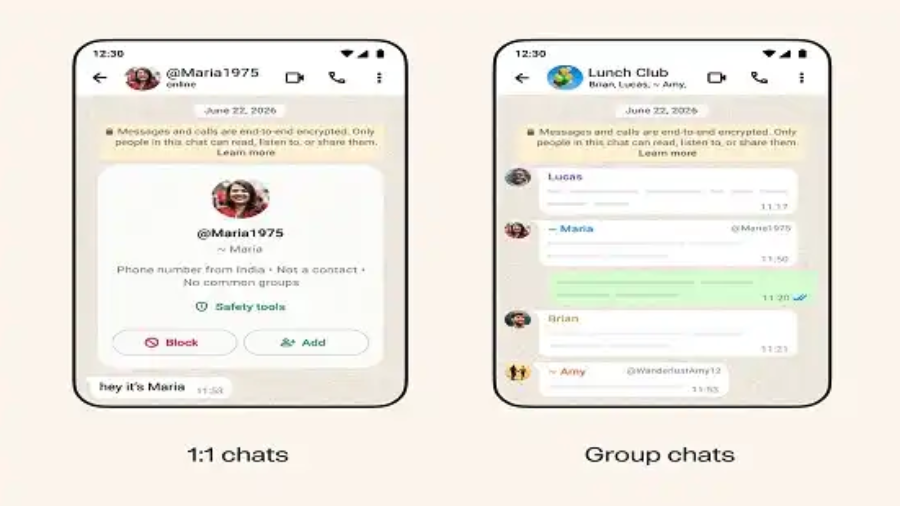
This particular issue became more clear in India in June 2026, when WhatsApp announced its feature of usernames. This feature basically allows users to connect with others without sharing their phone numbers immediately. This particular feature is presented by WhatsApp as giving its users an additional layer of privacy and greater control.

WhatsApp Usernames and the Debate Over Privacy

But the feature of usernames raised questions more than just convenience.

In July, the Indian Government asked WhatsApp to pause its feature of usernames in India while conferring. The government raised concerns that hiding phone numbers could make fraud and phishing easier. It also cautioned  that creation of similar usernames could make it easier for people to impersonate public figures or official organisations.

What seems like a debate over one WhatsApp feature actually raises a larger question about how we identify ourselves online.

The Balance Between Visibility and Privacy

It reminds us that our online identity is more than just a personal matter.

We usually think of usernames as a matter of something that we choose for ourselves. We may choose a nickname,or simply whatever is available. But once a platform links the name to our account, it becomes a part of the platform’s system that affects how searchable and visible we are online.

We are constantly balancing the need to be visible online with protecting our privacy.

We are asked to be identifiable, yet protect our identity. Be visible, yet private. Be authentic, but remain safe.

A username can offer some protection. Instead of sharing a phone number with someone they have just met, users can choose to share a username. For Professionals, students and everyday users, this small layer of privacy can make a real difference.

But privacy does not mean disappearing online.

A username can protect one piece of our personal information while making us visible in another manner. People can use it to recognise us , follow us or even impersonate us.

Who Controls Our Digital Identity?

And this is where the politics of online identity begins and a simple username becomes a question of power.

Not every individual has the same level of influence and power online. The consequences of copying a public figure or government institution can be very different from those faced by small scale business or an ordinary student.

The Indian Government raises a bigger question: who has the right to control our identity online once it becomes a part of a digital platform?

The issue becomes more complicated when we use one digital identity across multiple platforms.

Many people often use the same username across different social media platforms. When we use similar usernames in distinct places, they can connect different parts of our online lives. What seems as a convenient name can eventually become a trail through our online lives.

When Usernames Become a Digital Trail

Our digital identities are no longer restricted to one single platform.

They travel.

And as they travel, they begin to gather meaning.

How Technology Shapes the Way We Represent Our Names

This makes a digital identity a linguistic question too. India has many different ways of naming people. But once these names enter digital platforms, they have to fit the technical systems that decide which characters and formats can be used.

A name that feels completely natural and familiar in one language or cultural context, yet becomes difficult to represent when it enters the technical systems of a digital platform.

On the surface, this might seem to be a minor problem.

Yet what appears to be a small barrier can often reveal signs of deeper forms of digital inequalities.

A limit on character may seem technical. It can affect how a name is represented, while a search system can determine how that name can be found easily. In this manner, platform rules can therefore shape whose identities are more visible online.

Digital Inequality and the Question of Representation

This is why the politics of usernames goes beyond privacy.

Who gets to represent themselves online as they wish? Who must adapt their identity to fit the platform?  Who becomes visible, and who remains harder to find? And when an identity is misused or copied, whose identity does the platform protect?

These questions matter because platforms now do much more than help us communicate; they also shape how we are represented online.

Digital platforms are becoming a part of our daily lives. We use them to study, shop and maintain relationships. In India, WhatsApp has expanded beyond texting to include services such as recharges, payments and everyday other services.

Protecting Privacy Without Losing Accountability

The more deeply platforms become part of our daily lives, their power to shape our digital identities grows.

A username may seem like a minor technical feature, but it can have a much larger impact.

It is part of the digital system that makes people visible and identifiable online.

The goal should not be to choose between accountability and privacy. Digital platforms must find ways to protect both.

Rather than choosing between privacy and accountability, platforms and regulators should ask: How can people have greater control over the identities that they create online?

A username may be made of a handful of characters, yet its meaning can extend far beyond them.

Behind every username there is a real person whose identity extends beyond the screen. That person should have a say in how their identities are seen and represented online.

FAQs on Digital Identity / Username

  1. What distinguishes an internet username from a simple name?

    An individual’s online persona may include their internet username. It can demonstrate an individual’s desire for online recognition and representation.

  2. How do usernames influence one’s online persona?

    On social networking sites and other electronic mediums, usernames aid users in developing a specific identity. They have the power to affect how others see and comprehend them.

  3. Does internet presence have a political component?

    Indeed. The identification, classification, and visibility of users are determined by electronic platforms. This links issues of authority and control to online identities.

  4. Why is the importance of digital identification growing?

    Usernames, profiles, along with additional digital details are becoming progressively more crucial to how individuals are recognized since increasingly aspects of daily life shift digital.

Read my other blogs if you liked it

Connect with us on other Social Media Channel

YouTube: Click Here

Facebook: Click Here

Instagram: Click Here

LinkedIn: Click Here

Read my travel blogs at click here

ISRO

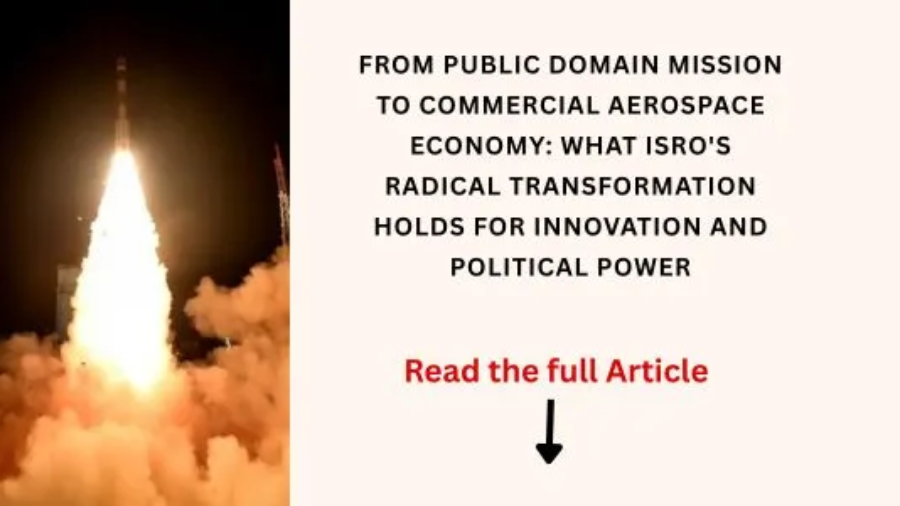
From Public Domain Mission to Commercial Aerospace Economy: What ISRO’s Radical Transformation Holds for Innovation and Political Power

India’s space program is going through a tremendous change. The Indian Space Research Organization (ISRO), which has traditionally been responsible for creating, building, and producing India’s space vehicles, is rapidly shifting beyond ordinary rocket manufacture and delegating more responsibility to commercial business and public sector entities.

ISRO’s Changing Role: From Public Mission to Commercial Ambition

IN-SPACe Chairman Pawan Goenka recently underlined this change, stating that ISRO will cease to solely concentrate on producing launching vehicles, with that task shifting progressively to private firms and government-sponsored entities. The goal is to enable ISRO to focus on studies, cutting-edge technologies, and experimental operations. This is a component of a bigger overhaul of India’s space sector that commenced with the introduction of the satellite-sector reforms in 2020.

At first look, this might look to represent a straightforward organizational or monetary choice. However, it poses a far bigger question: What will happen to a scientific organization if manufacturing, technological advancements, and operational endeavors grow progressively integrated into a privately owned and commercial network?

From Public Manufacturing to Private Sector Participation

At first look, this might look to represent a straightforward organizational or monetary choice. However, it poses a far bigger question: What will happen to a scientific organization if manufacturing, technological advancements, and operational endeavors grow progressively integrated into a privately owned and commercial network?

This does not suggest that ISRO is developing into a commercial entity. Rather, it indicates that ISRO is now progressively operating within a commercial technology framework.

This is an essential difference.

ISRO
ISRO

The Benefits and Challenges of Commercialisation

The private sector adds money, competitiveness, quicker production, and the chance to make innovations bigger more swiftly. The nation’s expanding satellite sector is also able to help the country become more competitive in the international space sector and generate fresh jobs. ISRO has said that involvement from the sector may assist to fulfill the growing need for start-up service offerings. In its yearly report, NSIL says it has signed a deal with company partners led by HAL to make five PSLV-XL vehicles from start to finish. At the same time, Indian industry is making 15 SSLVs.

But the rise in individualism impacts how authority works as well. When technical equipment is used in a business setting that is profitable, issues of speed, proprietary rights, owning information, funding, and making money get more significant.

Artificial Intelligence, Data, and the Changing Nature of Space Technology

This is when machine learning and digital innovations play a major part.

Data is a key component of today’s space programs. Large volumes of data are constantly produced by spacecraft, and machine learning is becoming more and more useful for analyzing telescopic pictures, spotting trends, anticipating malfunctions, improving efficiency, and aiding in making choices. AI can transform into a leadership and organizational device in addition to a technical instrument when additional space operations enter a privatized environment.

As an outcome, human employees may be progressively assisted—or assessed—by algorithmic and computerized procedures in a novel form of technical judgment.

Who Owns Technology? Public Investment and Private Interests

This returns us to a question that is frequently asked about modern firms: Who owns the technology itself, and who is impacted by it?

A rocket manufactured by a commercial enterprise is not necessarily problematic. In actuality, cooperation between the public and commercial sectors can improve the nation’s technological skills. The issue arises when concerns about public responsibility take a backseat to efficiency in technology as the main indicator of progress.

The Changing Nature of Scientific Labour

There is a labor component as well. The kind of labor may alter as manufacturing moves from government agencies to private businesses. Production processes could grow increasingly machined, driven by results, and specialized. Availability, manufacturing monitoring, fault detection, and job optimization may all be progressively determined by systems based on artificial intelligence. Therefore, innovation has the power to change not just whatever is generated but additionally how individuals perform.

For this reason, privatization does not constitute the sole way to understand the ISRO transformation. The vocabulary of scientific strength must also be used to analyze it.

Accountability, Data Security, and the Future of India’s Space Sector

The issue is not about if private businesses ought to take a role in the Indian airspace initiative. They certainly do, and it may be beneficial for them to participate. How this fresh ecology can be controlled is a particularly crucial concern.

India will need to build robust systems for accountability, ensuring data security, technical openness, and ethical utilization of AI if ISRO is progressively in charge of scholarly and sophisticated scientific initiatives whereas businesses produce and market existing technology.

Beyond Commercial Success: Protecting the Public Purpose of ISRO

Thus, the foreseeable future of India’s space endeavor might involve more than just the transfer of missiles from public to private manufacturers. It might be a tale of a whole technology organization undergoing change.

The notion that scientific understanding can fulfill a broader societal objective constituted the foundation of ISRO’s achievement. Making sure that technical advancement is not made a sign of company productivity alone would be a problem as India reaches a more profitable space era.

Therefore, the true question for India’s future space economy is not public or private?

It is: How can India develop a highly sophisticated and profitable space industry while not sacrificing focus on the public goal that initially enabled the Indian space program?

Frequently Asked Questions (FAQs)

  1. How is ISRO’s function in India’s aerospace industry evolving?

    India’s main space explorations and scientific investigations are still led by ISRO. At a comparable time, privately owned companies are being encouraged by government officials to produce standard telecommunications equipment, create standardized space technology, and offer commercial services of the highest quality.

  2. How may individual companies support the expansion of India’s space sector?

    The space industry can benefit from fresh concepts, capital, and rivalry between established companies. They can create conventional launching vehicles, telecommunications satellites, and additional technology, which will increase the field’s business opportunities.

  3. Why is the expansion of India’s space economy important?

    An expanding space economy has the potential to boost scientific inquiry, increase communication standards, generate employment opportunities, and offer services like predicting the weather. Additionally, it can increase India’s proficiency in technology and power in the international space industry.

Connect with us on other Social Media Channel

YouTube : Click Here

Facebook : Click Here

Instagram : Click Here

LinkedIn : Click Here

Read my travel blogs at click here

Airplane Mode

When you turn on Airplane Mode, what really occurs? Click to check details

When traveling, attempting to conserve battery capacity, or ignoring unwanted phone calls, nearly everyone has utilized Airplane Mode at a certain point. It is a characteristic that practically all contemporary smartphones include. Still, a lot of individuals don’t know exactly what it does.

Are all cellular connections terminated while in airplane mode? Is Wi-Fi still available? Is the alarm going to go off? Does turning it on actually assist in saving the battery’s life?

Consumers can utilize their mobile phones more effectively if they are aware of this capability.

Airplane Mode: What Is It?

Smartphones have a feature called “airplane mode” that immediately turns off some wireless connectivity functions. It is intended to lessen a gadget’s electromagnetic emissions, especially when it is connected to cellular networks.

Since airplanes have historically compelled travelers to restrict specific wireless connections throughout their flights, the functionality is known as airplane mode. However, the airline company and airport officials determine the precise guidelines for utilizing technological devices.

Your device usually switches off from its mobile connection when you choose to go to airplane mode. This implies that unless the necessary interconnections are reestablished, regular cellphone phone calls, messages that are sent via the cellular system, and standard cellular data are unlikely to function.

When you turn it on, what takes place?

1. There is a broken cellular network connectivity

Your cell phone typically quits interacting with neighboring mobile phone cellular towers, which is the very first significant modification.

As an outcome, when this relationship is deactivated, regular cell phone calls and SMS messages may not function properly. Additionally, your SIM card-based cellular web connection ceases.

When anyone phones your telephone number, they may hear an announcement saying that the phone you use is unavailable or the conversation might go to voicemail. Your internet connection and dialling parameters will determine the precise outcome.

This does not, however, suggest that the SIM card you have has already been disconnected. Whenever you re-enable the wireless network or turn off airplane mode, your cell phone account can rejoin.

2. Is Wi-Fi Still Available?

Yes, a lot of the time.

While the latest cellphones permit customers to manually turn Wi-Fi back to normal while maintaining airplane setting enabled, airplane mode typically removes Wi-Fi originally.

This means that once you link to a Wi-Fi connection, you might continue to be capable to utilize internet-connected apps, read reputable websites, and stream movies via the internet.

For instance, depending to the flight’s guidelines, a traveler could potentially be permitted to utilize the authorized boarded Wi-Fi connection while maintaining the mobile device in flight mode.

Keep in mind that cellular data is not the same as Wi-Fi access to the internet. The mobile connectivity on your SIM card is not instantly restored when Wi-Fi is turned on.

3. How About Bluetooth as an Alternative?

When airplane setting is initially turned on, Bluetooth can additionally be turned off. It is still able to be switched on again independently on a lot of devices.

Those that wish to use portable earphones, speakers, or similar Wireless equipment will find this helpful.

Gadgets and functioning platforms may exhibit different precise behaviors. As a result, while traveling, consumers ought to confirm the configurations on their mobile devices and adhere to flight guidelines.

4. Is Battery Saved by Airplane Mode?

It can assist in conserving battery lifespan, particularly in situations while cellular network coverage is poor.

A cellphone might require more energy when looking for an outlet or trying to get it back if it is having trouble maintaining a link. By deactivating cellular telecommunications, airplane setting might lessen this occurrence.

However, how the mobile device is used determines the extent to which battery life is conserved. Power usage is further influenced by running apps, multimedia playing, playing games, screen brightness level, and additional functions.

Therefore, using flight mode may not always ensure a noticeably longer lifespan for the battery.

Are the Additional Functionality of Your Mobile Device Actually Usable?

Indeed. The majority of functionality that doesn’t call for wireless connectivity can still be used when in mode of flight.

Typically, you can:

Take pictures and create videos.

Examine books and paperwork that you have acquired.

Choose music that has been stored on your mobile device.

If you have extracted the pertinent areas, kindly use offline or standard mapping.

Engage in videogames that don’t need a connection to the internet.

Set schedules, notifications, and reminders.

As long as the setting is set properly and the mobile device stays switched on, the alarm will usually sound regardless of whether flight mode is activated.

Nevertheless, without Wi-Fi, internet-dependent apps could not function.

Is Your Mobile Device Entirely Unavailable in Flight Mode?

Hardly always.

Although wireless communication is typically stopped, depending upon the application in question and your configuration, switching Wi-Fi on again allows for web-based texting and phone capabilities.

Wi-Fi calling is also supported by some gadgets, though its accessibility varies depending on the device, service provider, and setup.

As a result, using airplane mode by default does not ensure that no one will be able to get in touch with you. You may also be required to change settings for notifications or turn on Do Not Disturb feature if you prefer less disruptions.

Is Airplane Mode Beneficial When Not in an Airplane?

Indeed. Flight mode can be helpful in a number of circumstances.

When you would like minimal disruptions: You can use offline functionality while your mobile device is momentarily disconnected from a cellular connection.

When traveling: It is useful in controlling wireless signals, especially if you wish to avoid using wireless networks. Additionally, travelers ought to examine their cellular plan and international preferences.

Turning on as well as off flight mode can occasionally assist your device in reconnecting to a cellular network while experiencing connections.

During recharging: While the impact on time spent charging is variable, lowering network utilization may be beneficial in certain circumstances.

The Final Score

Turning off your cell phone is not exactly the same as putting the device in airplane configuration. While a variety of smartphone functions remain functional, it mostly regulates wireless communications, especially the wireless connectivity.

Based on the device in question, Wi-Fi and Bluetooth can be turned back on independently. Power reductions are achievable, however they depend on smartphone utilization and connection circumstances.

The subsequent time you go to flight mode, keep in mind that your mobile device is still working. Basically, certain of its internet access points have been restricted.

Frequently Asked Questions (FAQs)

  1. Is it possible to use Wi-Fi in flight mode?

    Yes, you may activate Wi-Fi again on the majority of cellphones while maintaining flight mode. After that, you can utilize a wireless connection to access an internet connection.

  2. Does flight mode conserve the battery’s life?

    Yes, by preventing your device from looking for a cellular connection, it can save considerable time on the battery. Nevertheless, the manner in which you use your smartphone will determine how much battery capacity is conserved.

  3. When flight mode is enabled, will my alarm go off?

    Yes, provided as your cellphone is turned on and the notification is set appropriately, your alarm will usually sound irrespective of whether airplane mode is on.

Like this article? Read my other blogs also

Connect with us on other Social Media Channel

YouTube : Click Here

Facebook : Click Here

Instagram : Click Here

LinkedIn : Click Here

Read my travel blogs at click here

Feel free to share your feedback in comment.

WhatsApp Username

When Your WhatsApp Username Turns into Your Online Address – Update on Whatsapp

WhatsApp Username – As texting expands far beyond telephone numbers, individual identities, virtual identities, confidence, and interactions change.

For many years, providing an individual your WhatsApp contact information was equivalent to providing them with your mobile number. A mobile number was more than just a means to answer phone calls; it was also a portal to conversations, discussion communities, professional contacts, and individual connections.

The addition of WhatsApp usernames alters the standard structure.

A username can help individuals communicate without the need for instantly sharing mobile numbers. On first look, this might seem to be a minor advantage. It does, however, symbolize a larger change in how individuals develop and express themselves digitally.

A telephone number can identify an individual via a mechanism linked with their cell phone. A username, on the other hand, is an attribute that an individual can select.

That is an important distinction.

From Phone Number to Online Address

Consider a standard phone number to be a confidential address that individuals provide to specific contacts.. A username can act somewhat like a digital address, which is capable of being utilized more carefully in virtual environments.

Individuals, self-employed people, creators, and small-business proprietors may find this differentiation beneficial.

Students who are looking for internships might not necessarily prefer to publicly share their own phone number. A freelancer may prefer an independent personality for professional communications. A small business proprietor might want clients to be able to contact them even without providing their personal phone number.

A person’s username may function as a barrier among themselves and the individual trying to connect with them.

However, it’s additionally indicating that it’s easy to recognize.

Our choice of name indicates a certain thing regarding who we are.

Certain individuals go by their true names. Others may use first names, nicknames, corporate identities, or a variety of vocabulary that correspond to their passions. The decision may influence the manner in which they would like to be seen by those around them.

Younger generations of users of the internet, who typically establish separate identities throughout various platforms, are especially affected by this.

As a result, the WhatsApp username may serve as an additional platform for online self-expression.

At some point, an individual’s username may be linked to their current employment, online communities, or general public image. An individual’s online credibility may be impacted by what starts out as a practical substitute for disclosing a contact information.

In simple terms, the username could grow into a tiny but obvious element that represents the individual hidden behind the screen.

Why This Matters for Jharkhand
Image credit: WhatsApp / Meta.

Why This Matters for Jharkhand

This change is not only significant in urban areas.

Smartphones and texting apps are becoming more and more integrated into routine communication in Jharkhand. Students utilize them to coordinate their studies, youngsters to make connections, business owners to find clients, and households to stay connected throughout towns and communities.

For an individual operating a modest home-based enterprise in Ranchi, a WhatsApp username might serve as another means to establish a publicly accessible persona.

Prospective clients could receive a username from an area based tutor, professional photographer, artist, or vendor despite not inevitably exchanging their personal contact information initially.

When both business and private communications take place on the exact same mobile device, this difference can prove especially helpful.

 IAPAD Burmu, Ranchi, Jharkhand case study
Image Credit IAPAD Burmu, Ranchi, Jharkhand case study

But Can a Username Build Credibility?

There is an additional aspect to this story.

When individuals meet via the internet, a phone number has always acted as no less than one distinctly recognizable means of contact. A username can express a sense of distance and flexibility.

This may be beneficial in terms of confidentiality, yet it may additionally make it difficult to determine the person associated with a user account.

A recognizable username is capable of being copied. An individual’s online presence could be different in comparison to their offline persona. As the importance of usernames grows, so does the risk of fake identities and miscommunication.

This indicates that digital proficiency requires more than just understanding the manner in which to establish an account and then write a text.

Users also have to learn the manner in which to identify fake profiles, verify identities, and exercise caution prior to trusting an unidentified digital persona.

Image Credit Zulfugar Karimov  Pexels
Image Credit Zulfugar Karimov Pexels

The Latest Online Address Book

The introduction of usernames could potentially alter the way individuals perceive information regarding their WhatsApp lists of contacts.

Instead of an address book based solely on contact information, individuals might more frequently communicate via a combination of private number data, usernames, and publicly accessible profiles.

This could lead to greater flexibility in digital interaction.

However, flexibility implies that individuals must decide what percentage of personal information they would like to share.

Should a username include your actual name? Should it disclose your occupation? Should it be associated with the persona you employ on different platforms?

These might seem like small choices right now. As online profiles grow more precious, such decisions can grow increasingly important.

Image Credit Pexels Wikimedia Commons

A Minor Feature with a Significant Relevance

WhatsApp usernames are much more than simply a novel way to label a user account.

They correspond to a larger trend regarding online interaction: individuals are slowly developing separate identities that connect among their personal and professional lives.

Although the contact information is still essential, it doesn’t need to serve as the sole means for an individual to contact us.

Image Credit WhatsApp Meta

Users in Jharkhand may benefit from this in terms of schooling, job opportunities, business ventures, and daily interactions. At the same moment, it increases individual users’ accountability to comprehend the ways in which they build and safeguard their virtual identities.

The most compelling question may not be what username you are going to select.

What sort of personality will that username ultimately convey? Because as our discussions shift digitally, a username could turn into more than merely an initial on an interface. It might become our virtual address to the entire globe.

FAQs on WhatsApp username

  1. What is the meaning of a WhatsApp username?

    Instead of just using a user’s contact information to get in touch and recognize them, a WhatsApp username can serve as a virtual identifier.

  2. In what way is a WhatsApp username crucial?

    Usernames can affect the way that individuals portray their self, find other people, and establish an identifiable web presence as they represent a vital component of their online persona.

  3. How can a WhatsApp username alter one’s online persona?

    The username becomes a more significant component of the manner in which individuals are portrayed online as it replaces an individual phone number with an online persona defined by the person who uses it.

Connect with us on other Social Media Channel

YouTube : Click Here

Facebook : Click Here

Instagram : Click Here

LinkedIn : Click Here

Read my travel blogs at click here

Have you read my article? Leave your thoughts and comments below

Project Sadak

How a 15-Year-Old Utilizing AI to Enhance Roads: When a Pothole Developed into an Issue to Resolve

Project Sadak – Most individuals find a pothole on a public street, express their frustration regarding it, and subsequently proceed on. But for Parth Anand, a 15-year-old student from Delhi, a particular pothole served as the inspiration for a far more general idea.

In October 2025, Anand’s parents were riding along on their motorcycle in Delhi when they accidentally hit a pothole and fell. It took a couple of months to recover. Anand was forced to consider the reason why, despite citizen reports, such road-related issues frequently go unsolved.

He ultimately established Project Sadak, a platform intended to improve the organization and transparency of pothole reporting procedures, as a result of that incident.

While pursuing his education, Anand began developing the platform in March 2026. Rather than merely gathering issues, Project Sadak seeks to determine which organisation is in charge of a specific road, subsequently forward the grievance to the relevant authority, and maintain public documentation of those proceedings.

How does Project Sadak work?

This procedure starts when a citizen posts an image and description of a deteriorating roadway. The platform employs an AI-powered algorithm to review the document and recognise recurrent grievances.

Once a pothole has been confirmed, an AI representative may assist in identifying the right authority and submitting a query. The reports are also captured, location-tagged, and time-stamped, thereby ensuring that their existence remains open to the public.

This method differs from just submitting an issue and awaiting an answer. The goal is to keep the whole procedure more transparent to citizens. According to the report, Project Sadak had received 1,815 reports across India by September, with more than 220 from Delhi. More than 1,500 reports were filed in Bengaluru, with more grievances coming from Rajasthan, Uttarakhand, and Kerala. More than 20 repairs were recorded as well using the platform.

AI has a practical purpose

Anand’s project is captivating for more than just the use of AI.. It demonstrates the manner in which artificial intelligence is capable of being utilized to solve a seemingly simple issue.

AI is frequently brought up in the context of conversational assistants, developing software, and upcoming technologies. Project Sadak offers a different approach: employing technology to assist individuals with dealing with issues related to their daily lives.

Anand developed the website with his personal programming skills at first, but as the work grew in complexity, he turned to artificial intelligence. One obstacle was recognising identical reports of the same pothole using details like images and coordinates from GPS.

More than just highlighting a pothole

The overarching concept underlying Project Sadak is responsibility.

Citizens can file reports about deteriorating roads via current governmental avenues, although they might not be aware of what comes next. Anand’s platform aims to produce a straightforward path from submission to fixing it.

This elevates the undertaking beyond a mere technological test. It raises an easy question: Can technological advances assist in helping citizens observe what takes place following the time they report an issue?

For a teenager to turn a personal incident into a community innovation project demonstrates how young individuals can help solve common issues. Rather than simply accepting potholes as an inevitable aspect of urban existence, Anand decided to try a technological fix.

Project Sadak fails to address the broader issue surrounding deteriorating roads on its own. Roads continue to need governmental organisations, financing, inspections, and prompt action. However, the initiative demonstrates the manner in which technological advancement has the ability to keep one aspect of the procedure more systematic — reporting and tracking issues.

At times, creative thinking doesn’t start alongside a complex issue. It starts by recognising a phenomenon that other people have grown accustomed to overlook.

FAQ on Project Sadak

  1. What is Project Sadak?

    Parth Anand, a 15-year-old Delhi student, built Project Sadak, a municipal technological platform that allows users to file reports, track, and keep up on potholes and deteriorating roadways.

  2. How does Project Sadak utilise artificial intelligence (AI)?

    The platform employs artificial intelligence technologies to validate data, detect similar pothole problems, and help determine the entity in charge of a certain route.

  3. How do citizens detect potholes using Project Sadak?

    Citizens can share a snapshot and the exact spot of a damaged road. The report can then be checked, location-tagged, and time-stamped, thereby allowing progress to be followed.

Connect with us on other Social Media Channel

YouTube : Click Here

Facebook : Click Here

Instagram : Click Here

LinkedIn : Click Here

Read my travel blogs at click here