
Kanyakumari Travel Guide – Kanyakumari marks the southernmost tip of mainland India, where the Arabian Sea, the Bay of Bengal, and the Indian Ocean meet.
Travellers visit this coastal town to enjoy stunning sunrise and sunset views, explore the Vivekananda Rock Memorial, admire the Thiruvalluvar Statue, and seek blessings at the Kumari Amman Temple.
They also enjoy ferry rides, local seafood, and vibrant markets. Visit between October and March for pleasant weather. Kanyakumari offers a perfect mix of natural beauty, history, culture, and spirituality for every traveller.
Watch Kanyakumari Full Travel Vlog on YouTube. Click Here
Why You Should Visit Kanyakumari
Travel with Ranchi Article and discover the breathtaking beauty of Kanyakumari, the southernmost tip of mainland India.
Watch spectacular sunrise and sunset views where three seas meet, explore the iconic Vivekananda Rock Memorial, seek blessings at the Kumari Amman Temple, and admire the towering Thiruvalluvar Statue.
Enjoy scenic ferry rides, savor authentic South Indian cuisine, and experience the region’s rich culture and history.
Whether you love adventure, photography, or peaceful escapes, Ranchi Article helps you plan an unforgettable journey to Kanyakumari.
READ ABOUT: HIDE AND SEEK BEACH OF INDIA CLICK HERE
Best Time to Visit Kanyakumari
The best time to visit Kanyakumari is from October to March, when the weather remains cool and pleasant.
During these months, temperatures range between 20°C and 30°C, making it ideal for sightseeing, beach walks, ferry rides, and visiting attractions like the Vivekananda Rock Memorial and the Thiruvalluvar Statue. The clear skies also offer breathtaking sunrise and sunset views.
If you enjoy cultural celebrations, visit during October or November to experience local festivals. Avoid the monsoon season (June to September), as heavy rainfall may disrupt outdoor activities and ferry services.
Summer (April to June) can be hot and humid, but early mornings and evenings remain suitable for exploring the town.
How to Reach Kanyakumari
By Air
The nearest airport is Trivandrum International Airport (Thiruvananthapuram), located about 90 km from Kanyakumari. You can hire a taxi or take a bus from the airport to reach the town in around 2–3 hours.
By Train
Kanyakumari Railway Station connects the town with major Indian cities, including Chennai, Bengaluru, Mumbai, Delhi, and Kolkata. Regular trains make rail travel one of the most convenient ways to reach Kanyakumari.
By Road
Kanyakumari has excellent road connectivity with nearby cities such as Thiruvananthapuram, Nagercoil, Madurai, and Tirunelveli. You can travel by state-run buses, private coaches, taxis, or self-drive cars via well-maintained highways.
Local Transportation
Getting around Kanyakumari is easy. Use auto-rickshaws, taxis, local buses, or rental cabs to visit popular attractions. Many landmarks, including the Kumari Amman Temple, Gandhi Memorial, and the ferry terminal, are within walking distance of each other, making walking a convenient option for sightseeing.
Must-Visit Places in Kanyakumari
Kanyakumari offers a perfect blend of natural beauty, history, and spirituality. Make sure to visit these top attractions during your trip:
- Vivekananda Rock Memorial – Take a ferry ride to this iconic monument, where Swami Vivekananda is believed to have meditated before his journey to spread Indian philosophy.
- Thiruvalluvar Statue – Admire the magnificent 133-foot statue of Thiruvalluvar, a symbol of Tamil literature and wisdom.
- Kumari Amman Temple – Visit this ancient temple dedicated to Goddess Kanya Kumari, one of India’s most revered pilgrimage sites.
- Gandhi Memorial Mandapam – Explore the memorial built in honor of Mahatma Gandhi, where his ashes were kept before immersion.
- Triveni Sangam – Witness the unique confluence of the Arabian Sea, the Bay of Bengal, and the Indian Ocean.
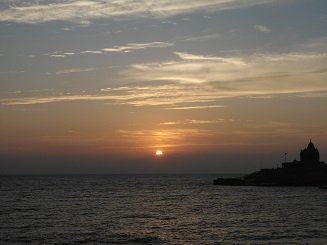
- Sunrise and Sunset Viewpoints – Experience Kanyakumari’s world-famous sunrise and sunset over the ocean from the same coastline.
- Mayapuri Wax Museum – If you’re visiting Kanyakumari, the Mayapuri Wonder Wax (also known as the Kanyakumari Wax Museum) is a fun stop for families, children, and photography enthusiasts.
- Kanyakumari Beach – Relax by the shore, enjoy the sea breeze, and watch colorful waves meet at India’s southernmost tip.
- Government Museum – Discover ancient sculptures, archaeological artifacts, and exhibits showcasing the region’s rich cultural heritage.
- Vattakottai Fort – Visit this historic seaside fort, located about 7 km from Kanyakumari, and enjoy panoramic views of the coastline and the Western Ghats.


History and Significance of the Thiruvalluvar Statue Kanyakumari
The Thiruvalluvar Statue stands on a small rocky island near Kanyakumari and honors the legendary Tamil poet and philosopher Thiruvalluvar, the author of the timeless classic Tirukkural. The statue rises to a height of 133 feet, symbolizing the 133 chapters of the Tirukkural. Completed in 2000, it represents wisdom, virtue, and humanity. Visitors admire its impressive architecture and panoramic views of the meeting point of the Arabian Sea, the Bay of Bengal, and the Indian Ocean. Today, the monument stands as a proud symbol of Tamil culture, literature, and India’s rich philosophical heritage.
Interesting Facts About the Thiruvalluvar Statue – Must Visit Place in Kanyakumari
The Thiruvalluvar Statue is one of Kanyakumari’s most iconic landmarks and attracts visitors from around the world. Here are some fascinating facts about this remarkable monument:
- The statue stands 133 feet (40.5 meters) tall, representing the 133 chapters of the Tirukkural.
- Its 38-foot pedestal symbolizes the 38 chapters on Virtue (Aram), while the 95-foot statue represents the chapters on Wealth (Porul) and Love (Inbam).
- The monument honors Thiruvalluvar, one of the greatest Tamil poets and philosophers.
- Thousands of granite stones were used to build the statue, showcasing exceptional Indian craftsmanship.
- The statue stands on a rocky islet beside the Vivekananda Rock Memorial, creating one of Kanyakumari’s most photographed views.
- Visitors can enjoy spectacular views of the Arabian Sea, the Bay of Bengal, and the Indian Ocean from the ferry route to the monument.
- The statue has become a symbol of Tamil culture, wisdom, and literary excellence, making it a must-visit attraction in Kanyakumari.
Things to Do in Kanyakumari – Kanyakumari Travel Guide
Adventure Activities
Take a ferry ride to the Vivekananda Rock Memorial and Thiruvalluvar Statue, enjoy a scenic boat trip, explore the rocky coastline, cycle along the seafront, or watch the spectacular sunrise and sunset where three seas meet.
Sightseeing
Visit the Vivekananda Rock Memorial, Thiruvalluvar Statue, Kumari Amman Temple, Gandhi Memorial Mandapam, Triveni Sangam, Our Lady of Ransom Church, Kanyakumari Beach, and Vattakottai Fort. Each attraction showcases the region’s history, spirituality, and natural beauty.

Cultural Experiences
Attend temple rituals at Kumari Amman Temple, experience local festivals such as Navratri and Chaitra Purnima, interact with local artisans, and learn about Tamil culture and the teachings of the Tirukkural through the Thiruvalluvar Statue.
Shopping
Browse the local markets for colorful seashell handicrafts, conch-shell souvenirs, palm-leaf products, handmade jewelry, spices, traditional Tamil handicrafts, cotton textiles, and decorative home items.
Local Food to Try
Treat your taste buds to authentic South Indian dishes such as idli, dosa, appam, puttu, and pongal. Seafood lovers should try fresh fish curry, prawn fry, and crab dishes. Finish your meal with a refreshing glass of tender coconut water or a serving of traditional South Indian filter coffee.
Where to Stay in Kanyakumari
Kanyakumari offers accommodation for every budget, from affordable guesthouses to luxury hotels with sea views.
Budget Hotels
Budget travelers can choose from clean hotels, lodges, and guesthouses near Kanyakumari Railway Station and the beach. These stays provide comfortable rooms, basic amenities, and easy access to major attractions.
Mid-Range Hotels
Mid-range hotels offer spacious rooms, restaurants, Wi-Fi, parking, and family-friendly services. Many are located close to the Vivekananda Rock Memorial ferry terminal and the Kumari Amman Temple.
Luxury Hotels & Resorts
Luxury hotels and beachfront resorts provide premium amenities, sea-view rooms, swimming pools, fine dining, and exceptional hospitality. They are ideal for couples, families, and travelers seeking a relaxing stay.
Homestays
Choose a homestay to experience local hospitality and authentic Tamil culture. Many hosts offer home-cooked meals, personalized service, and helpful travel tips, making your Kanyakumari trip more memorable.
Famous Local Dishes in Kanyakumari
Kanyakumari’s cuisine blends traditional Tamil and Kerala flavors, offering delicious vegetarian and seafood specialties. Don’t miss these local favorites:
- Fish Curry – Freshly caught fish cooked in a tangy coconut and tamarind-based gravy.
- Prawn Fry – Crispy, spicy prawns seasoned with local herbs and spices.
- Crab Masala – Flavorful crab prepared with aromatic South Indian spices.
- Appam with Vegetable or Chicken Stew – Soft, bowl-shaped rice pancakes served with creamy stew.
- Idli and Sambar – A classic South Indian breakfast loved by locals and visitors alike.
- Masala Dosa – Crispy rice crepes filled with spiced potato and served with chutneys.
- Puttu and Kadala Curry – Steamed rice cakes paired with a delicious black chickpea curry.
- Pongal – A comforting rice and lentil dish flavored with black pepper, cumin, and ghee.
- Banana Chips – A crunchy local snack made from fresh raw bananas.
- Filter Coffee – End your meal with a rich and aromatic cup of authentic South Indian filter coffee.
These dishes let you experience the authentic flavors and rich culinary traditions of Kanyakumari.
Sample Itinerary for Kanyakumari
One-Day Itinerary
Start your day by watching the famous sunrise at Kanyakumari Beach. Visit the Kumari Amman Temple, then take a ferry to the Vivekananda Rock Memorial and the Thiruvalluvar Statue. After lunch, explore the Gandhi Memorial Mandapam and Triveni Sangam. End your day by enjoying the spectacular sunset from the beach.
Two-Day Travel Plan
Day 1:
Watch the sunrise, visit the Kumari Amman Temple, Vivekananda Rock Memorial, Thiruvalluvar Statue, Gandhi Memorial Mandapam, and Triveni Sangam. Spend the evening shopping for local handicrafts and enjoying South Indian cuisine.
Day 2:
Visit Our Lady of Ransom Church, explore Vattakottai Fort, relax at Kanyakumari Beach, and enjoy panoramic coastal views. If time permits, visit the Government Museum before departing.
Weekend Trip Guide
A weekend is perfect for exploring Kanyakumari’s top attractions. Spend your first day visiting iconic landmarks and watching the sunrise and sunset. Reserve your second day for nearby attractions, local shopping, authentic Tamil cuisine, and relaxing by the beach. This itinerary lets you experience the best of Kanyakumari in just two days.
Estimated Total Budget
- Budget Trip: ₹3,000–₹6,000 per person
- Mid-Range Trip: ₹7,000–₹12,000 per person
- Luxury Trip: ₹16,000+ per person
Travel Tips for Kanyakumari
Make your Kanyakumari trip safe, comfortable, and memorable with these helpful tips:
- Visit between October and March for pleasant weather and enjoyable sightseeing.
- Wake up early to witness the famous sunrise and stay until evening for the spectacular sunset.
- Book ferry tickets early, especially during weekends and holidays, to avoid long queues.
- Wear light, comfortable clothing and comfortable walking shoes for exploring attractions.
- Carry sunscreen, sunglasses, a hat, and a reusable water bottle to stay protected from the sun.
- Dress modestly when visiting temples, especially the Kumari Amman Temple.
- Keep cash and digital payment options handy, as some small shops may not accept cards.
- Taste authentic South Indian cuisine and fresh seafood at local restaurants.
- Respect local customs and help keep beaches and tourist sites clean by avoiding littering.
- Book your hotel in advance during the peak tourist season to get the best prices and availability.
FAQ About Kanyakumari Travel Guide
-
Where is Kanyakumari located?
Kanyakumari is located in Tamil Nadu, at the southernmost tip of mainland India, where the Arabian Sea, the Bay of Bengal, and the Indian Ocean meet.
-
What is the best time to visit Kanyakumari?
The best time to visit is October to March, when the weather is cool and pleasant for sightseeing.
-
Is Kanyakumari safe for solo travelers and families?
Yes. Kanyakumari is generally a safe destination for solo travelers, families, and couples. Follow basic travel precautions and keep your belongings secure.
-
What are the top attractions in Kanyakumari?
Must-visit places include the Vivekananda Rock Memorial, Thiruvalluvar Statue, Kumari Amman Temple, Gandhi Memorial Mandapam, Triveni Sangam, and Vattakottai Fort.
Visit other Places like Kanyakumari
How was your reading experience about my blog, Kanyakumari Travel Guide? COMMENT BELOW!